
Older Single-Story Home TV Mounting in Costa Mesa
TV Mounting Square Costa Mesa covers TV mounting in the postwar one-story homes that fill much of Costa Mesa — College Park and Halecrest from the 1950s, Mesa Verde from the 1960s and the older Eastside blocks — where an original plaster living room can sit next to an added family room and an enclosed breezeway, so each wall is identified before it is drilled.
Bookings aren't open yet. Leave your name and number; your message is recorded, and you'll get one message when a local installer is available.
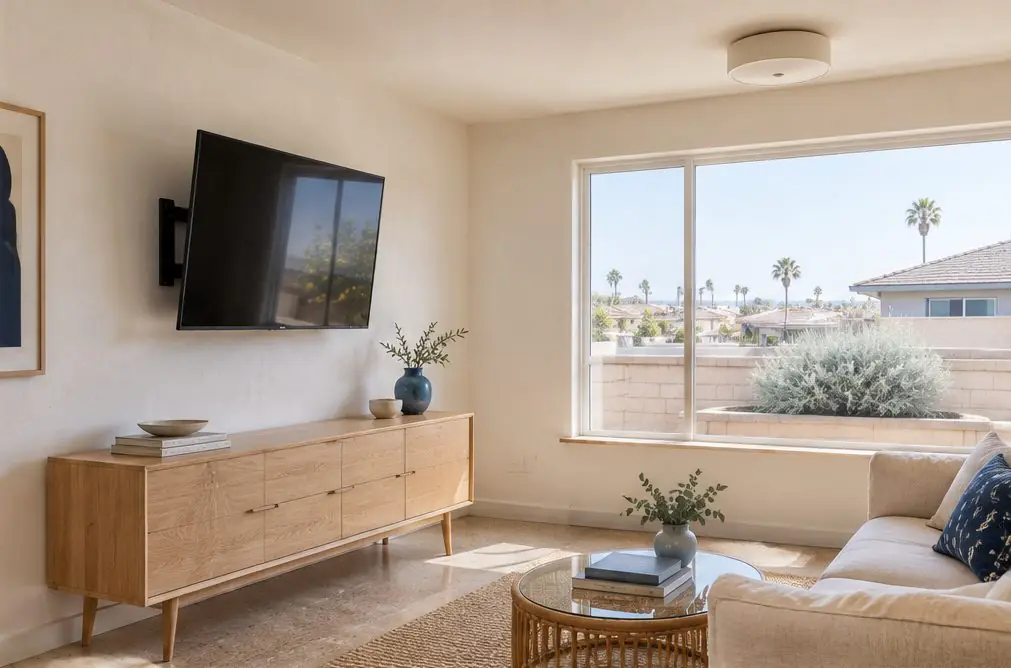 Illustration
Older Single-Story Home TV Mounting in Costa Mesa, CA typically runs $105–$419 per TV in our 2027 estimator, depending on the TV size and the wall type. Use the estimator below for your own numbers.
A city built in two decades
Costa Mesa incorporated in 1953, and its population roughly doubled between the 1960 census (about 37,500) and the 1970 census (about 72,700). Most of the single-story tracts went up in that window, on former farmland, and most have been altered since: a kitchen opened to the family room, a garage turned into a bedroom, a breezeway closed in.
So one house can hold three surfaces that look alike once painted. There is plaster troweled over wood lath in the original rooms, gypsum board hung when the tract was new, and modern drywall wherever a remodel reached. A knock, a glance at the outlets and old patch lines, and a small test hole behind the future plate tell them apart.
Where plaster slows the work and adds to the price
Plaster does not forgive a fast drill. It is hard on the surface and brittle behind, and a hole pushed through quickly can pop a fist-sized piece off the wall. The installer covers each bolt position with tape, runs a carbide bit at low speed with the hammer setting off, and picks lag bolts long enough to pass the plaster and lath and still sink well into the stud.
| Room | What the wall usually is | Bolt length |
|---|---|---|
| Original living room or hall | Plaster over wood lath, close to an inch thick | Longest |
| Bedrooms finished with the tract | Early gypsum board | Standard |
| Kitchen, family room or addition | Modern drywall | Standard |
That slower routine is what the estimator's plaster line, $25–$45, pays for.
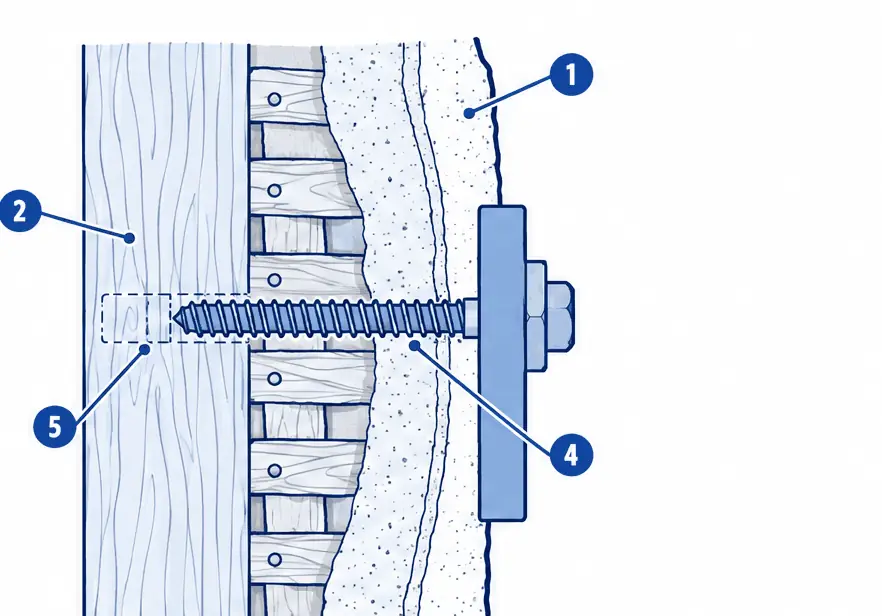
What the numbers show
- Plaster coat Troweled on in layers; hard but brittle, and useless as a fixing on its own.
- Wood lath Thin boards nailed across the framing, with gaps the plaster squeezed into when wet.
- Framing stud The solid wood the plate actually depends on.
- Extra-long lag bolt Sized to pass both outer layers with plenty of thread left in the stud.
- Gentle pilot hole Drilled slowly with no hammer action so the surrounding plaster stays intact.
Breezeways, converted garages and low ceilings
Many 1950s plans joined the house and the garage with an open breezeway. Where owners have enclosed it, the walls are often framed differently from the rest of the house, sometimes on the old exterior stucco, sometimes with studs on wider centers. The same goes for garages turned into bedrooms or dens. These rooms get their own probe hole every time.
Ceilings in these houses are usually around eight feet, so there is little height to spare. The screen center is marked from the main seat with tape, and the top edge is checked against the ceiling and any soffit before the plate goes up.
Old paint and textured ceilings
A house built before 1978 may have lead in its older paint layers, and some popcorn ceilings and joint compounds of that period contain asbestos. A handful of bolt holes disturbs very little; opening a wall for an in-wall cable run, or drilling into a textured ceiling, disturbs more. Owners who plan that kind of work can have the material tested first. Drill dust is collected at the bit with a vacuum attachment and the floor wiped afterward.
Older Single-Story Home TV Mounting — common questions
How do I know if my living room wall is plaster?
Plaster is harder and colder to the touch, sounds dull when knocked and resists a push pin. A small test hole behind the planned plate confirms it.
Can the TV go on the wall of an enclosed breezeway?
Usually yes, but that wall was built separately from the house, so its framing is found by probe and not assumed.
Availability & price range
Older Single-Story Home TV Mounting: check availability and price range
Bookings aren't open yet — answer a few quick questions about the TV and the wall and get a typical Costa Mesa price range right here. Typical Costa Mesa prices for one TV, labor only unless an option says otherwise. This is a market estimate, not a quote.