
In-Wall TV Wire Concealment in Costa Mesa
TV Mounting Square Costa Mesa covers hiding TV wires inside the wall in Costa Mesa homes — an in-wall rated power kit between two recessed plates, rated low-voltage cable, and a cavity checked first for blocking, plaster and the neighbor's side of the wall.
Bookings aren't open yet. Leave your name and number; your message is recorded, and you'll get one message when a local installer is available.
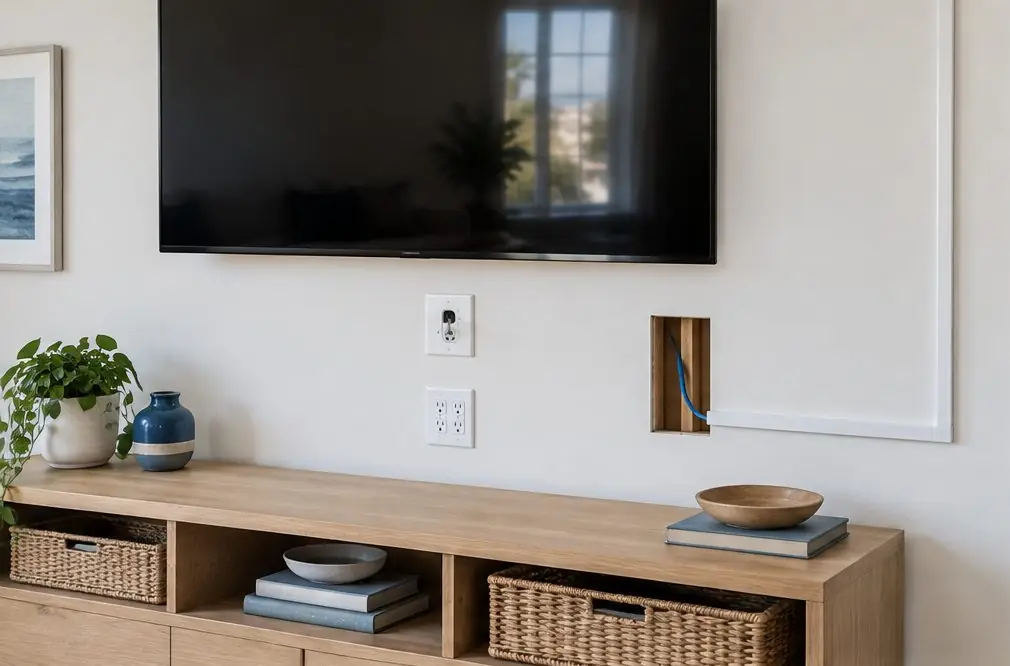 Illustration
What can and cannot go in a wall
A standard power cord, an extension lead or a power strip never goes inside a wall. In-wall work uses an in-wall rated power relocation kit, which has a plate behind the TV and one near the outlet, and low-voltage cables rated for in-wall use, such as CL3 HDMI.
Is the cavity open?
Behind drywall the cavity between two studs is usually open from top to bottom, but horizontal blocking, a fire-stop or insulation can stand in the way. In a 1950s house with plaster over lath the wall is less friendly, and a cut leaves a patch that rarely disappears. The installer checks the cavity before promising a hidden run.
The power kit runs from an existing outlet
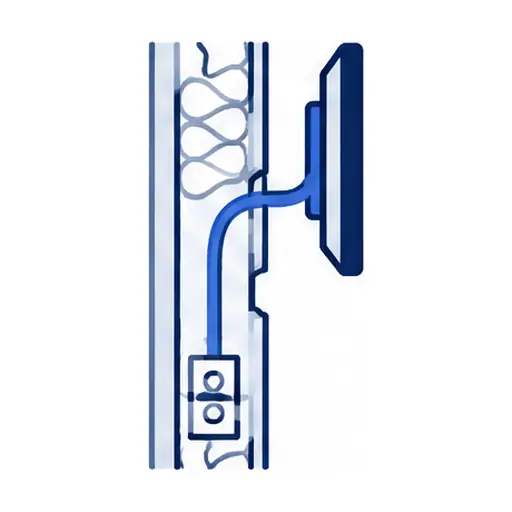
The kit draws power from the outlet already in the room. One recessed plate sits behind the TV, another near the existing outlet, and the rated cable runs down the stud bay between them. HDMI and other low-voltage lines pass through a brush opening in the upper plate.
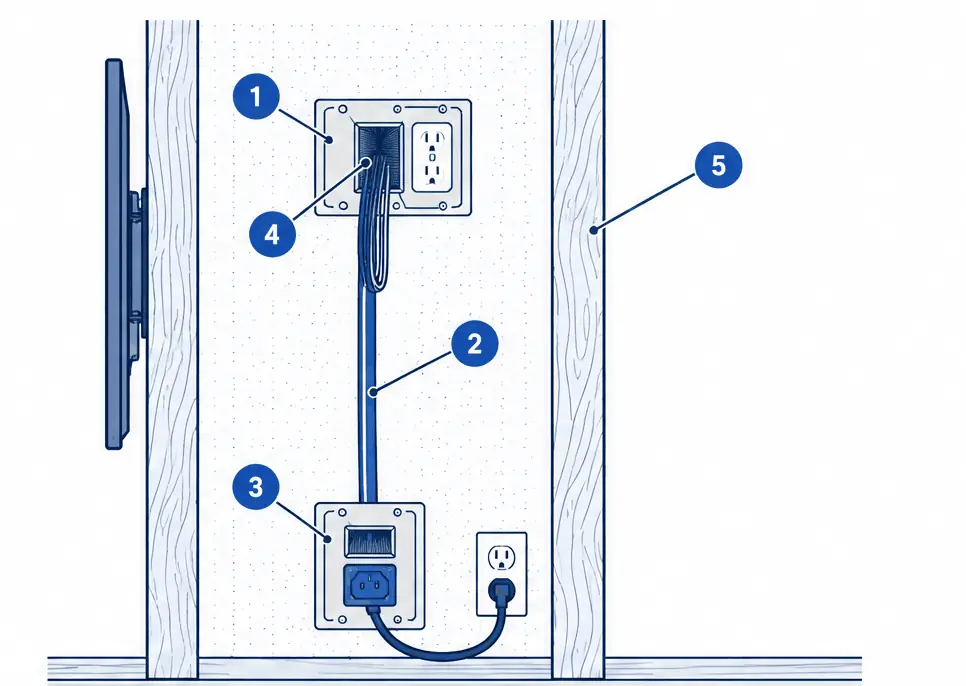
What the numbers show
- Upper outlet plate A recessed plate behind the TV holds the receptacle the TV plugs into.
- Rated cable In-wall rated cable joins the two plates inside the stud bay; a plain cord is never used.
- Lower inlet plate A recessed inlet near the floor takes power from an existing outlet by a short cord.
- Cable pass-through A brush-covered opening lets thin HDMI cables travel the same bay.
- Stud at the bay edge The studs on either side frame the bay the cable runs through.
Shared walls and the raceway alternative
Where the wall is shared with a neighbor, a cut or a recessed box is a bad idea, and CC&Rs often limit work in it. A slim paintable raceway on the wall surface is the usual alternative there, in plaster rooms, and on masonry.
In-Wall Wire Concealment — common questions
How much does hiding wires cost?
In 2026 Costa Mesa ranges, $95–$160 over the base range, labor only.
Can wires be hidden in a plaster wall?
Sometimes, but the patch is hard to hide. A raceway is the common choice.
Availability & price range
In-Wall Wire Concealment: check availability and price range
Bookings aren't open yet — answer a few quick questions about the TV and the wall and get a typical Costa Mesa price range right here. Typical Costa Mesa prices for one TV, labor only unless an option says otherwise. This is a market estimate, not a quote.